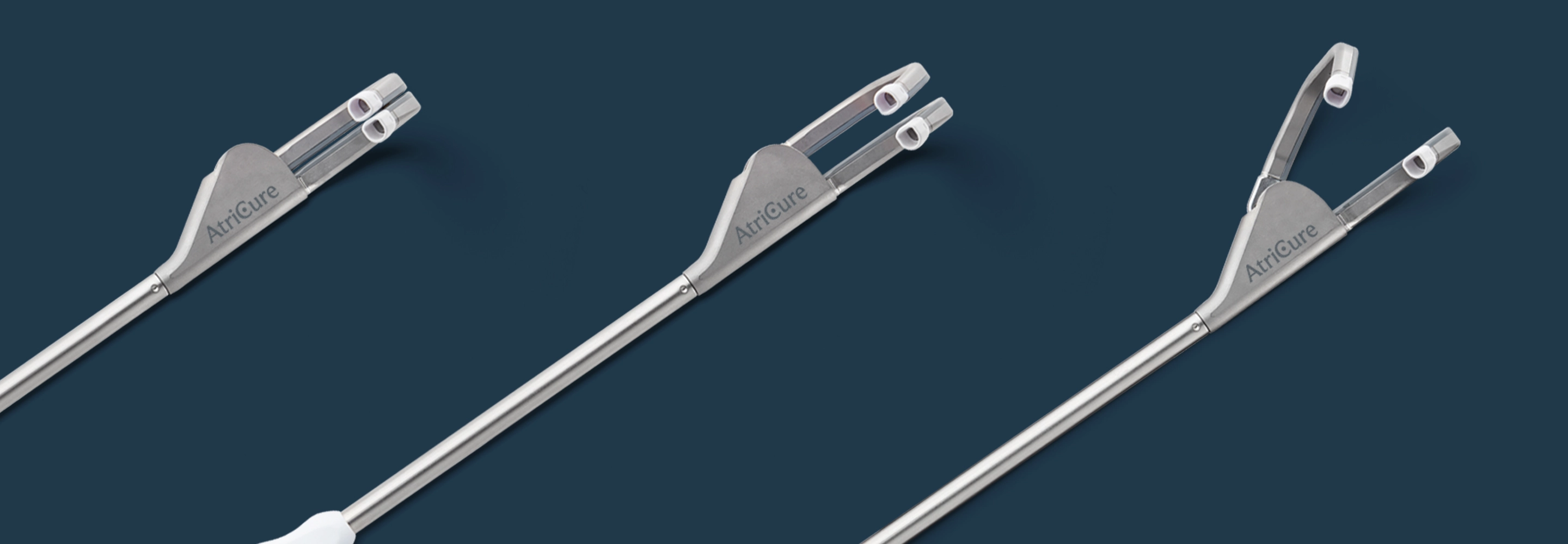
The EPi-Sense family is the first and only FDA-approved set of devices for minimally invasive ablation therapy to treat long-standing persistent Afib—the most prevalent and undertreated Afib patient population.
#HybridAFTherapy#Epeeps#Afib
At AtriCure, career growth is part of the employee experience. We’re proud to support employees as they take on new challenges, pursue promotions, move into leadership roles, or explore opportunities in different parts of the business.
If you’re looking for a company that values development and supports long-term growth, take a look at our current openings and see where your next step could lead. Openings: https://okt.to/rZ6s04
For patients undergoing heart surgery, the incidence of post-operative atrial fibrillation (POAF) can be close to 50%, depending on the type of surgery and patient characteristics.
That makes POAF the leading complication of cardiac surgery and brings the risk of adverse acute and long-term clinical outcomes including longer hospital and ICU stay.
What’s being explored to help those patients?
The BoxX-NoAF trial is evaluating the safety and effectiveness of surgical ablation and left atrial appendage management in non-Afib cardiac surgery patients to reduce the incidence of POAF and long-term clinical Afib.
Richard Whitlock
#ClinicalTrial#Afib#cardiacsurgery
Attending #STSA2026? Stop by the AtriCure booth to learn more about the global leader in LAA exclusion, the AtriClip® device portfolio. And, discover how the Isolator Synergy EnCompass® clamp can be used alongside AtriClip during CABG procedures.
For Joseph, pain management was an important part of his recovery after leg amputation. With Extremity Cryo Nerve Block (cryoNB) used during surgery to help manage residual limb pain, he found support when he needed it most. Today, he says he can’t imagine his journey without it.
Don't let these fibs about Afib fool you! Swipe to learn the facts and take control of your heart health.
To learn more about the impact of #AFib and possible treatment options, visit: https://okt.to/oCGpNR
#AtrialFibrillation
At AtriCure, our manufacturing teams bring precision, expertise and dedication to every step of the process – helping deliver medical devices designed to improve patient outcomes and transform lives.
We’re proud of the people behind the products and the passion they bring to their work every day. #ManufacturingDay
We rode with purpose! Team AtriCure brought plenty of energy and spirit to this year's CycleNation ride, coming together for a fun and inspiring event in support of the American Heart Association and American Stroke Association in the Greater Cincinnati community.
Whether walking, riding, volunteering, or fundraising, our teams are committed to advancing awareness, supporting lifesaving research, and helping improve outcomes for patients and their families.
#CycleNation#AHA
Data shows that patients who receive surgical ablation during cardiac surgery have improved long-term survival, better quality of life, and can return to normal life expectancy curves when sinus rhythm is restored.
Learn more:
The EPi-Sense family is the first and only FDA-approved set of devices for minimally invasive ablation therapy to treat long-standing persistent Afib—the most prevalent and undertreated Afib patient population.
The information on this page is intended for Healthcare Professionals. If you are a Patient or a Caregiver, please visit the 'Patients and Caregivers' page.
Click "Agree" to confirm you are a Healthcare Professional.
The information on this page is intended for Healthcare Professionals. If you are a Patient or a Caregiver, please visit the 'Patients and Caregivers' page.
Click "Agree" to confirm you are a Healthcare Professional.
The information on this page is intended for Patients and Caregivers. If you are a Healthcare Professional, please visit the 'Healthcare Professionals' page.
Click "Agree" to confirm you are a Patient or a Caregiver.
You are leaving the AtriCure Asia Pacific site
You are leaving the Asia Pacific site of AtriCure.com and entering an AtriCure site intended for users in USA.
You are leaving the AtriCure Asia Pacific site
You are leaving the Asia Pacific site of AtriCure.com and entering an AtriCure site intended for users in Canada, Central & South America.
You are leaving the AtriCure Asia Pacific site
You are leaving the Asia Pacific site of AtriCure.com and entering an AtriCure site intended for users in Europe & Middle East.
You are leaving the AtriCure Europe & Middle East site
You are leaving the Europe & Middle East site of AtriCure.com and entering an AtriCure site intended for users in USA.
You are leaving the AtriCure Europe & Middle East site
You are leaving the Europe & Middle East site of AtriCure.com and entering an AtriCure site intended for users in Canada, Central & South America.
You are leaving the AtriCure Europe & Middle East site
You are leaving the Europe & Middle East site of AtriCure.com and entering an AtriCure site intended for users in Asia Pacific.
You are leaving the AtriCure Canada, Central & South America site
You are leaving the Canada, Central & South America site of AtriCure.com and entering an AtriCure site intended for users in USA.
You are leaving the AtriCure Canada, Central & South America site
You are leaving the Canada, Central & South America site of AtriCure.com and entering an AtriCure site intended for users in Asia Pacific.
You are leaving the AtriCure Canada, Central & South America site
You are leaving the Canada, Central & South America site of AtriCure.com and entering an AtriCure site intended for users in Europe & Middle East.




Matching Pain Management Strategy to the Patient
Duration: 00:33
BoxX-NoAF Clinical Trial
Duration: 00:55
A Message to Other Surgeons
Duration: 00:47
The Risks of Not Treating Afib
Duration: 00:30
social media channels to keep updated on the latest at AtriCure.